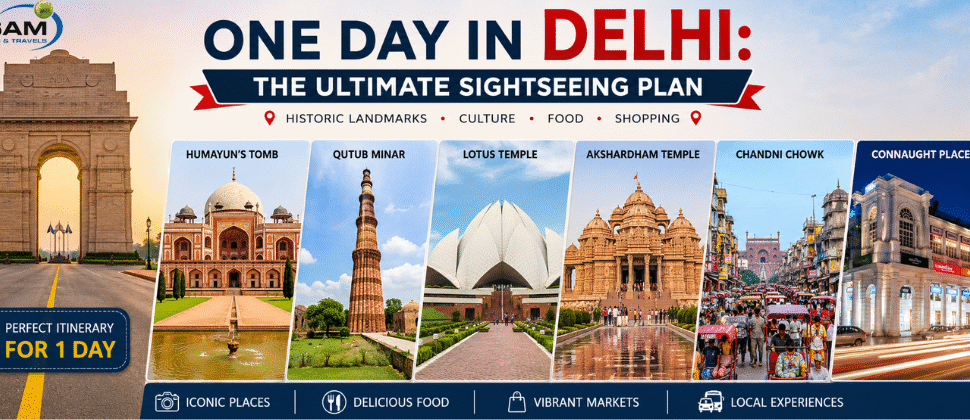
Delhi is a city where history comes alive at every corner. As one of the oldest continuously inhabited cities in the world, Delhi has witnessed the rise and fall of empires, the construction of magnificent monuments, and the evolution of diverse cultures over centuries. From majestic Mughal forts to ancient tombs and colonial-era landmarks, the city is a treasure trove for history enthusiasts.
If you’re passionate about exploring the past, here are the top heritage sites in Delhi that every history lover should visit.
Why Delhi Is a Paradise for History Lovers
Few cities in the world offer the historical diversity found in Delhi. The city has served as the capital for several dynasties, including the Delhi Sultanate, the Mughals, and the British Empire. As a result, Delhi boasts an extraordinary collection of forts, mosques, tombs, temples, and colonial structures.
Every monument tells a story, making Delhi an open-air museum for travelers who love history and architecture.
Red Fort: The Pride of Mughal Delhi
One of Delhi’s most iconic landmarks, the Red Fort was built by Mughal Emperor Shah Jahan in 1648. This UNESCO World Heritage Site served as the residence of Mughal rulers for nearly 200 years.
Highlights
- Massive red sandstone walls
- Diwan-i-Aam (Hall of Public Audience)
- Diwan-i-Khas (Hall of Private Audience)
- Rang Mahal
- Sound and Light Show
The fort remains an important symbol of India’s history and independence.
Qutub Minar: Delhi’s Tallest Historic Monument
Standing at 73 meters, Qutub Minar is one of the most visited heritage sites in Delhi.
Built in the 12th century by Qutb-ud-din Aibak, this UNESCO World Heritage Site marks the beginning of Muslim rule in India.
What Makes It Special?
- Intricate stone carvings
- Arabic inscriptions
- Five distinct architectural levels
- Historic Iron Pillar nearby
The monument offers a fascinating glimpse into Delhi’s medieval past.
Humayun’s Tomb: The Inspiration Behind the Taj Mahal
Humayun’s Tomb is one of Delhi’s most beautiful historical landmarks.
Built in 1570, it was the first garden tomb in India and later inspired the design of the Taj Mahal.
Must-See Features
- Persian-style gardens
- Symmetrical Mughal architecture
- Grand mausoleum
- Beautiful walkways and water channels
History lovers and photographers alike find this monument unforgettable.
Jama Masjid: A Masterpiece of Mughal Architecture
Constructed by Shah Jahan in 1656, Jama Masjid is one of the largest mosques in India.
Located in the heart of Old Delhi, it remains an active place of worship and a major historical attraction.
Highlights
- Three grand gates
- Marble domes
- Massive courtyard
- Stunning city views from the minaret
Its architectural beauty reflects the grandeur of the Mughal era.
Purana Qila: Delhi’s Ancient Fortress
Purana Qila, or Old Fort, is believed by many historians to stand on the site of the legendary city of Indraprastha from the Mahabharata.
The fort’s massive walls and ancient structures make it one of Delhi’s most intriguing heritage sites.
Attractions
- Qila-i-Kuhna Mosque
- Sher Mandal
- Archaeological Museum
- Historic fortifications
The site offers a unique blend of mythology and history.
Safdarjung Tomb: The Last Great Mughal Monument
Built in 1754, Safdarjung Tomb is often considered the final masterpiece of Mughal architecture before the empire’s decline.
Why Visit?
- Beautiful Mughal gardens
- Elegant architecture
- Peaceful atmosphere
- Excellent photography opportunities
Despite being less crowded than other monuments, it remains one of Delhi’s hidden historical gems.
Agrasen Ki Baoli: Delhi’s Historic Stepwell
Tucked away near Connaught Place, Agrasen Ki Baoli is a fascinating heritage site that many tourists overlook.
This ancient stepwell features 108 stone steps descending into a deep reservoir.
Highlights
- Unique architecture
- Historic significance
- Peaceful surroundings
- Popular photography location
The structure offers a rare glimpse into Delhi’s ancient water management systems.
Raj Ghat: Memorial of Mahatma Gandhi
Raj Ghat marks the cremation site of Mahatma Gandhi, the Father of the Nation.
Surrounded by landscaped gardens, the memorial provides a peaceful space for reflection.
Key Features
- Black marble platform
- Eternal flame
- Beautiful gardens
- Historical significance
It remains an important landmark in modern Indian history.
India Gate: A Colonial-Era Landmark
Although newer than Delhi’s Mughal monuments, India Gate is one of the city’s most significant heritage landmarks.
Built in memory of Indian soldiers who died during World War I, the monument continues to be a symbol of national pride.
Visitor Highlights
- Impressive war memorial
- Amar Jawan Jyoti
- Evening illumination
- Popular gathering place
The monument is particularly beautiful after sunset.
Jantar Mantar: A Scientific Wonder
Built in 1724 by Maharaja Jai Singh II, Jantar Mantar is one of India’s most remarkable astronomical observatories.
What You’ll Discover
- Giant sundials
- Astronomical instruments
- Scientific innovations
- Historic engineering achievements
The site demonstrates India’s advanced understanding of astronomy centuries ago.
Best Time to Explore Delhi’s Heritage Sites
The ideal time to visit Delhi’s historical monuments is between October and March.
During these months:
- Pleasant weather
- Comfortable sightseeing
- Clear skies for photography
- Ideal conditions for walking tours
Winter is particularly popular among domestic and international tourists.
Tips for History Lovers Visiting Delhi
To make the most of your heritage tour:
- Start early to avoid crowds.
- Wear comfortable walking shoes.
- Carry water and sunscreen.
- Hire a licensed guide for deeper historical insights.
- Visit major attractions on weekdays when possible.
A well-planned itinerary can help you explore multiple monuments in a single day.
Final Thoughts
Delhi’s heritage sites offer an incredible journey through more than a thousand years of history. From the towering Qutub Minar and majestic Red Fort to the elegant Humayun’s Tomb and ancient Agrasen Ki Baoli, every monument reveals a different chapter of India’s fascinating past.
Whether you’re a history enthusiast, architecture lover, or curious traveler, these heritage sites provide unforgettable experiences that showcase the rich cultural legacy of India’s capital city.
If you truly want to understand Delhi, start with its monuments—they are the storytellers of the city’s remarkable history.